Written by the NABOLY Team | Hebron, Palestine | Updated October 26, 2026 | Approximately 15-minute read
Two pairs of leather shoes can look almost identical on a store shelf while being manufactured using completely different construction methods.
One pair may have a sole attached with adhesive. Another may feature stitching through the upper, insole, and outsole. A third might use a separate strip of material, known as a welt, to connect the shoe’s upper to its sole.
These differences influence how footwear is manufactured, how it flexes, how it can be repaired, and how it performs during regular use.
For customers, understanding shoe construction can make it easier to evaluate footwear beyond its appearance. For retailers and distributors, construction knowledge is useful when comparing manufacturers, reviewing product specifications, and explaining footwear features accurately.
The four terms buyers commonly encounter are cemented, Blake-stitched, Goodyear-welted, and stitchdown construction. Cemented shoes rely primarily on adhesive bonding, Blake construction stitches the sole directly through the shoe’s internal layers, Goodyear welting uses an intermediate welt, and stitchdown construction turns the upper outward before attaching it to the sole.
Each method has advantages and limitations.
A well-made cemented leather shoe may be more appropriate for certain lightweight footwear designs than a heavy welted construction. Likewise, a Goodyear-welted boot may offer repair possibilities that are not practical for many cemented shoes.
The construction method alone, however, does not guarantee quality.
This guide explains the major shoe construction methods, compares their characteristics, and shows what footwear buyers should examine before selecting leather shoes, sandals, loafers, dress shoes, and boots.
Shoe Construction Methods: Quick Comparison Chart
| Construction Method | How the Sole Is Attached | Common Characteristics | Resole Potential |
|---|---|---|---|
| Cemented | Adhesive bonds the sole assembly to the upper | Can support lightweight, flexible designs | Depends on materials and design; often limited |
| Blake-stitched | Stitching passes through the insole, upper margin, and outsole | Typically slim profile and flexible construction | Often possible with specialized equipment |
| Goodyear-welted | Upper and insole structure attach to a welt; outsole is attached to the welt | Structured design, repair-oriented construction | Generally favorable when components remain sound |
| Stitchdown | Upper edge turns outward and is stitched to the sole structure | Often a robust-looking construction with visible stitching | Varies by specific design |
| Blake Rapid | Blake stitching attaches a midsole, with additional stitching securing the outsole | Combines a relatively streamlined construction with an additional sole layer | Often designed with repairability in mind |
| Direct-injected | A sole-forming material is molded and bonded directly to the upper assembly | Can provide integrated sole construction and efficient production | Usually specialized or limited |
These are general characteristics. Actual footwear performance and repairability depend on materials, construction details, workmanship, and condition.
1. What Does Shoe Construction Actually Mean?
Shoe construction refers to the techniques used to assemble a shoe and connect its components into a finished product.
The term is often used specifically to describe the method of attaching the outsole to the upper.
This connection matters because footwear undergoes repeated mechanical stress during walking.
As the foot moves, the shoe bends, compresses, and experiences forces at different points.
The upper and sole must remain appropriately connected while allowing the product to perform as intended.
Understanding the Main Parts of a Shoe
Before comparing construction methods, it’s useful to understand basic footwear anatomy.
Upper: The portion of the shoe that covers or holds the foot. It may be made from leather, textile, synthetic materials, or combinations.
Lining: Material covering parts of the interior upper, depending on the design.
Insole: A structural component beneath the foot that may contribute to the shoe’s assembly and support.
Footbed or sock liner: The surface on which the foot rests. Some shoes have removable footbeds.
Midsole: A layer between the insole structure and outsole that may contribute to cushioning, thickness, or construction.
Outsole: The external bottom surface designed to contact the ground.
Welt: A strip of material used in certain constructions to connect the upper or insole structure with the outsole.
Last: A three-dimensional form used to shape footwear during production.
Not every shoe includes all these components separately.
For example, an open leather sandal may use a simpler sole assembly than a structured leather dress shoe.
Why the Sole Attachment Method Matters
The connection between the upper and outsole affects several important characteristics:
- Structural integrity
- Flexibility
- Weight
- Appearance
- Manufacturing requirements
- Water entry pathways
- Repair and resoling options
However, construction should always be evaluated alongside the footwear’s materials and intended use.
Our leather types guide explains how differences in leather grain and finishing also affect the material used in footwear.
2. What Is Cemented Shoe Construction?
Cemented construction uses an appropriate footwear adhesive to bond the sole assembly to the upper or lasted shoe.
The word cemented does not mean that actual building cement is used.
In footwear manufacturing, cement refers to specialized adhesive systems designed for bonding shoe components.
The process is widely used in different footwear categories.
How Cemented Shoes Are Made
A typical cemented construction process may involve:
- Cutting and stitching the upper.
- Shaping the upper around a shoe last.
- Preparing the sole and bonding surfaces.
- Applying the required adhesive system.
- Joining the sole assembly to the upper under suitable conditions.
- Allowing the bond to develop according to the process.
- Finishing and inspecting the completed shoe.
Actual procedures vary depending on the materials and adhesive technology.
Surface preparation, adhesive selection, application, pressure, and processing conditions can influence bond quality.
Advantages of Cemented Shoe Construction
Design flexibility
Cemented construction can accommodate many types of footwear and sole designs.
Lightweight options
Because a traditional welt and extensive stitching structure may not be required, manufacturers can produce relatively light footwear.
Streamlined appearance
Cemented soles can allow a close-fitting edge profile.
Efficient manufacturing
The process can reduce some assembly steps compared with more elaborate stitched constructions.
Material versatility
Appropriate adhesive systems can bond different footwear components when properly selected and processed.
Disadvantages of Cemented Construction
The quality of an adhesive bond depends on the materials and manufacturing process.
If bonding surfaces are prepared incorrectly or the adhesive system is unsuitable, separation can occur.
Exposure to heat, moisture, chemicals, and repeated wear can also affect some sole materials and bonds.
Another consideration is repairability.
Although a skilled repair professional may be able to replace certain cemented soles, many products are not designed for straightforward resoling.
Does Cemented Mean Low Quality?
No.
Cemented construction is a legitimate footwear manufacturing method.
A properly designed and manufactured cemented shoe can be appropriate for its intended use.
Quality depends on the material specifications, adhesive process, construction, and finished product.
It would be inaccurate to claim that every cemented shoe is inferior to every stitched shoe.
3. What Is Blake-Stitched Shoe Construction?
Blake stitching is a shoe construction method in which stitching passes through the outsole and the bottom of the lasted upper assembly, typically including the insole structure.
Unlike traditional Goodyear-welted construction, standard Blake stitching does not require a separate welt.
This allows manufacturers to produce shoes with a relatively close-trimmed sole edge.
Blake construction is often associated with refined leather footwear, including certain dress shoes and loafers.
How Blake-Stitched Shoes Are Made
A typical process includes:
- Preparing the upper.
- Lasting it into the intended shape.
- Positioning and attaching the outsole.
- Using a specialized sewing machine to stitch through the sole and internal shoe structure.
- Finishing the outsole and shoe edges.
The defining feature is the direct stitched connection through the shoe’s bottom layers.
Advantages of Blake Stitching
Slimmer sole appearance
Blake construction can support a sleek, close-cut profile.
Flexibility
Many Blake-stitched shoes are relatively flexible because they contain fewer structural layers than traditional welted designs.
Suitable for refined footwear
The method is often used when designers want an elegant silhouette.
Resoling potential
Blake-stitched shoes can often be resoled when the overall construction and materials remain suitable.
Limitations of Blake Stitching
The stitching passes through the shoe’s bottom structure.
This can create pathways for moisture depending on the design, sole materials, finishing, and use.
Blake resoling also requires appropriate skills and equipment.
Not every shoe repair shop has the machinery necessary to reproduce the original stitching.
Repeated repairs may eventually be limited by the condition of the upper and other structural components.
Is Blake Stitching Better Than Gluing?
Not universally.
Blake stitching can offer repairability and a distinctive construction, but cemented footwear may be more suitable for some lightweight or specialized designs.
The correct choice depends on the intended product.
What Shoes Commonly Use Blake Stitching?
The method is associated with selected leather dress shoes, loafers, and other relatively streamlined footwear.
However, the appearance of a leather loafer does not prove that it uses Blake construction.
Always check the model-specific specification.
Retailers can browse NABOLY’s loafers and moccasins collection to explore footwear designs, while confirming the construction method for any particular model directly with the manufacturer.
4. What Is Goodyear Welt Construction?
Goodyear welt construction connects the upper and an insole attachment structure to a separate strip called a welt. The outsole is then attached to that welt, generally using a separate line of stitching.
This creates a distinct construction in which the outsole can often be replaced without directly separating the upper from its primary attachment structure.
Goodyear welting is widely associated with repairable leather dress shoes and boots.
How Goodyear-Welted Shoes Are Made
The exact process varies, but a typical construction follows these stages.
Step 1: Prepare and last the upper
The upper is shaped around a last.
Step 2: Attach the upper to the insole structure
The upper is joined with the welt and an appropriate insole rib or attachment structure.
Step 3: Create the welted connection
Specialized stitching secures the welt in place.
Step 4: Prepare the bottom cavity
Depending on the design, the space between structural layers may contain cork or other filling materials.
Step 5: Attach the outsole
The outsole is joined to the welt using an outsole stitch, often with adhesive also used during assembly.
Step 6: Finish the shoe
The manufacturer trims, shapes, and finishes the sole edges and other components.
Advantages of Goodyear Welt Construction
Repair-friendly design
The outsole can often be removed and replaced while preserving the main upper-to-welt connection.
Structured construction
The method can support substantial leather footwear designs.
Potential for repeated resoling
Where the welt, upper, and other components remain in acceptable condition, multiple outsole replacements may be possible.
Traditional shoemaking character
Some customers appreciate the visible construction details and craftsmanship associated with welted footwear.
Disadvantages of Goodyear Welt Construction
Additional manufacturing complexity
The process requires specialized equipment, materials, and operations.
Potential additional weight
Traditional welted shoes may have more structural material than some lightweight constructions.
Different flexibility characteristics
Some welted shoes may feel firmer initially, although flexibility varies substantially by model.
Repair cost
Although resoling may be possible, it involves professional labor and additional materials.
Repairability should not be confused with free or inexpensive maintenance.
Are Goodyear-Welted Shoes Waterproof?
Not automatically.
A welted construction may offer advantages in some footwear designs, but water resistance depends on the entire shoe.
Leather, stitching, sole materials, seams, linings, and additional treatments all influence moisture protection.
A standard Goodyear-welted dress shoe should not be advertised as waterproof without appropriate product-specific evidence.
Are Goodyear-Welted Shoes Always More Durable?
No.
Goodyear construction can facilitate repairs and long service life, but its actual performance depends on workmanship, components, use, and maintenance.
A poorly manufactured welted shoe may perform worse than a properly manufactured shoe using a simpler construction.
5. What Is Stitchdown Shoe Construction?
Stitchdown construction is another method of attaching the upper to the sole assembly.
In stitchdown construction, the lower edge of the upper is generally turned outward and secured to the sole structure through stitching.
This outward-facing attachment creates a recognizable construction pattern.
Stitchdown methods are often associated with certain boots and robust casual footwear.
How Stitchdown Differs From Goodyear Welt
Both methods use stitching, but the construction arrangement differs.
With Goodyear welting, a separate welt forms part of the connection.
In stitchdown construction, the turned-out upper material itself participates in the attachment to the sole structure.
Some stitchdown variations also use additional components or layers.
This is why two shoes with visible stitching around the sole may not be constructed in the same way.
Advantages of Stitchdown Construction
Depending on the design, stitchdown can provide:
- A secure mechanical connection
- A distinctive sole-edge appearance
- Construction suitable for selected boots
- Potential repairability
- Opportunities for robust sole assemblies
Limitations of Stitchdown Construction
The outward construction can produce a wider-looking sole profile.
The amount of flexibility depends on the sole, upper, and other components.
Repair options also vary by the exact construction.
Some stitchdown boots are designed with resoling in mind, while other designs may be more difficult to repair.
What Is the Difference Between Stitchdown and Decorative Stitching?
A visible row of stitches does not necessarily mean those stitches structurally attach the outsole.
Some footwear has decorative stitching or a simulated welt.
Retailers should not identify a construction method based only on its appearance.
The manufacturer’s technical description provides a more reliable answer.
6. What Is Blake Rapid Construction?
Blake Rapid is a variation that adds another stage to a Blake-style sole attachment.
In a common configuration, the upper and insole structure are Blake-stitched to a midsole, and the outsole is then attached to that midsole using an additional line of stitching.
This creates a different construction from ordinary Blake stitching.
Blake vs. Blake Rapid
| Feature | Standard Blake | Blake Rapid |
|---|---|---|
| Primary stitched connection | Through the outsole and internal structure | Through the midsole and internal structure |
| Additional outsole attachment | Usually no separate Rapid stitch | Separate outsole stitching |
| Sole layers | Often relatively minimal | Typically includes an additional layer |
| Profile | Frequently slim | Can be somewhat more substantial |
| Repair considerations | Requires appropriate specialized capability | Additional outsole layer can support certain repair approaches |
The exact construction depends on the manufacturer.
Why Would a Manufacturer Choose Blake Rapid?
A designer may want a construction that combines elements of Blake stitching with a separate outsole attachment.
This can allow different sole designs and repair arrangements.
However, it is not automatically superior to Goodyear, ordinary Blake, or cemented construction.
Each method should be evaluated against the intended footwear specifications.
7. What Is Direct-Injection Shoe Construction?
Direct-injection construction uses a molding process to form or attach the sole assembly directly to the prepared footwear upper.
Depending on the system, materials such as polyurethane may be introduced into a mold and processed to create the intended sole.
The process differs from attaching a separately manufactured outsole with traditional stitching.
How Direct-Injection Construction Works
A simplified process may involve:
- Preparing and assembling the upper.
- Positioning it within suitable manufacturing equipment.
- Introducing the sole-forming material.
- Forming the sole according to the mold and processing conditions.
- Removing and finishing the completed footwear.
The specific equipment and materials differ by manufacturing system.
Advantages of Direct-Injection Construction
Potential benefits include:
- Integrated sole attachment
- Efficient production
- Design flexibility
- Different cushioning and sole-property options
- Suitability for selected casual and work-related footwear designs
Limitations
Direct-injected sole assemblies may be difficult to replace using conventional resoling techniques.
Repair options depend on the sole material and structure.
Some molded materials also have aging characteristics that must be considered.
Does Injection-Molded Mean Cheap?
No.
The process is a manufacturing technique, not a universal quality rating.
Manufacturers choose construction methods according to product requirements, available technology, and commercial considerations.
A properly produced direct-injected shoe can be suitable for its intended use.
8. Stitched vs. Glued Shoes: Which Lasts Longer?
One of the most common footwear questions is whether stitched soles are stronger or longer-lasting than glued soles.
The answer depends on what is being compared.
A stitched construction can provide a mechanical connection, but the quality of the stitching, materials, and assembly remains important.
An adhesive bond can also provide a secure connection when the correct process and materials are used.
What Affects Sole Durability?
Several factors matter:
Material compatibility: The upper, sole, and attachment system must work together.
Manufacturing quality: Incorrect processing can compromise either stitched or bonded construction.
Footwear use: Daily work, occasional formal wear, and casual use place different demands on shoes.
Flexing: Repeated movement places stress on components and attachment points.
Moisture and heat: Environmental conditions can influence materials and construction.
Maintenance: Cleaning, drying, storage, and repair practices can affect the footwear’s condition.
Stitched vs. Cemented Construction Comparison
| Factor | Stitched Construction | Cemented Construction |
|---|---|---|
| Attachment | Mechanical stitching, sometimes alongside adhesive | Primarily adhesive bonding |
| Construction complexity | Depends on stitching method | Depends on materials and bonding process |
| Flexibility | Varies by design | Can support very flexible designs |
| Weight | May require additional components | Can allow lighter constructions |
| Repairability | Some methods facilitate resoling | Often more limited, but not always impossible |
| Water resistance | Depends on the whole shoe | Depends on the whole shoe |
| Quality | Depends on materials and workmanship | Depends on materials and workmanship |
Key takeaway: Stitched does not automatically mean better, and glued does not automatically mean poorly manufactured.
9. Which Shoe Construction Is Best for Durability?
Durability should be evaluated according to what the shoe is expected to do.
If a buyer prioritizes repeated outsole replacement, certain welted and stitched constructions may be attractive.
If the product is intended to be lightweight, flexible, and suitable for everyday casual use, a well-designed cemented or molded construction may be appropriate.
Long-Term Durability vs. Repairability
These concepts are related, but different.
Durability refers to how well a product maintains its intended performance under use.
Repairability refers to whether components can be repaired or replaced.
A shoe can be durable but difficult to resole.
Likewise, a shoe may be designed for resoling but still experience problems if its upper or internal structure deteriorates.
The Importance of the Outsole
Outsole materials influence wear and traction.
Different materials have different physical characteristics.
For example, leather, rubber, and polyurethane outsoles may perform differently depending on their formulations, design, and intended use.
The attachment method cannot compensate for an outsole that is unsuitable for the customer’s needs.
Why Leather Upper Quality Matters
Even if the outsole can be replaced, the remaining upper must be in suitable condition.
A shoe with severely damaged upper material may not be worth resoling.
Understanding material quality is therefore important alongside construction.
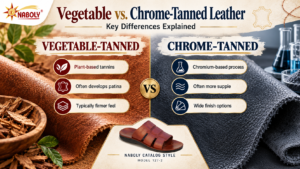
Our vegetable vs. chrome tanning guide explains how leather processing can influence the properties of footwear materials.
That link should be checked against the published article URL before use.
10. Which Shoe Construction Is Most Comfortable?
Construction can influence comfort, but no single construction method guarantees a comfortable shoe.
Fit, last design, materials, footbed, upper flexibility, and outsole properties all contribute.
Factors That Affect Comfort
Correct sizing
Footwear that is too narrow, short, or long can be uncomfortable regardless of construction.
Footbed design
The surface beneath the foot can influence pressure distribution and support.
Upper flexibility
Leather thickness and finishing can affect how the shoe bends around the foot.
Sole flexibility
Different construction methods and sole materials create different bending characteristics.
Weight
The overall weight of the shoe may influence how it feels during prolonged use.
Does Blake Stitching Feel More Comfortable?
Some Blake-stitched shoes have relatively slim and flexible sole assemblies.
However, that does not make every Blake-stitched shoe more comfortable than every Goodyear-welted or cemented shoe.
Actual fit is more important than relying solely on a construction label.
Do Goodyear-Welted Shoes Require a Break-In Period?
Some structured welted shoes may feel firmer initially.
However, break-in characteristics depend on the materials and specific design.
A customer should not be encouraged to wear shoes that cause significant pain in the expectation that the construction will eventually become comfortable.
For international footwear purchases, consult our EU, US, UK and Middle East shoe size conversion guide and the manufacturer’s model-specific fit information.
11. Can You Resole Cemented, Blake and Goodyear Shoes?
Resoling involves replacing a worn outsole or sole assembly.
Whether this is possible depends on the construction, condition, materials, and equipment available to the repair professional.
Goodyear-Welted Shoes
Goodyear-welted footwear is generally designed to allow outsole replacement without necessarily disrupting the upper-to-welt attachment.
This can make resoling a practical option.
However, the welt and other components may also require repair over time.
Blake-Stitched Shoes
Many Blake-stitched shoes can be resoled, but the process requires appropriate machinery and expertise.
Not every repair shop can provide the service.
Blake Rapid Shoes
The separate outsole attachment may make certain types of sole replacement more accessible, depending on the exact design.
Stitchdown Shoes
Some stitchdown footwear can be resoled, but the construction varies.
A repair professional should evaluate the specific shoe.
Cemented Shoes
Certain cemented footwear can be repaired or fitted with a replacement sole.
However, many products are not designed for economical or straightforward resoling.
Direct-Injection Shoes
Conventional sole replacement may be difficult because the sole is formed and bonded as part of the manufacturing process.
Some specialist repairs may be possible, but they cannot be assumed.
When Is Resoling Worthwhile?
Consider:
- Condition of the upper
- Condition of the footbed and lining
- Available repair methods
- Cost of repair
- Original footwear quality
- Expected further use
- Customer preference
A repairable construction does not guarantee that every worn shoe should be repaired.
12. How Can You Tell Whether a Shoe Is Stitched or Cemented?
Buyers sometimes try to identify shoe construction by looking at the sole.
Visible details can provide clues, but they are not always conclusive.
Look at the Sole Edge
Some welted footwear has a visible strip between the upper and outsole.
Stitchdown construction may show an outward-turned upper attached near the sole edge.
However, decorative elements can imitate these appearances.
Examine the Outsole
Stitching may be visible on the bottom of certain shoes.
Other manufacturers conceal stitching within a channel.
The absence of visible stitches does not necessarily prove that a shoe is cemented.
Inspect the Interior
Some Blake-stitched shoes may reveal stitching through the insole structure.
A sock liner or other internal layer may conceal it.
Look for a Separate Welt
A structural welt can be a clue to welted construction.
However, some footwear includes decorative strips that resemble welts without serving the same structural role.
Ask for the Product Specification
The most reliable approach is to request the construction method from the manufacturer.
A retailer should not advertise a model as Goodyear-welted or Blake-stitched based only on appearance.
13. What Construction Methods Are Common in Leather Sandals?
Leather sandal manufacturing differs from many closed-toe shoe constructions.
An open sandal may not require the same upper-lasting process as a traditional leather dress shoe.
Instead, it may rely on a combination of straps, a footbed, and an outsole.
Sandal Strap Construction
The straps must be securely connected to the sole structure.
Manufacturers may use different methods, depending on the design.
These can include stitching, adhesive bonding, mechanical attachment, or combinations.
Footbed and Sole Assembly
A sandal may feature several layers, such as a leather footbed surface, cushioning material, and an external outsole.
The layers must be assembled appropriately.
Why Strap Attachment Matters
Because sandals use relatively open uppers, the position and strength of the straps can be important for fit and product integrity.
Buyers should review:
- Strap attachment points
- Stitching consistency
- Edge finishing
- Footbed shape
- Sole bonding
- Left and right sandal consistency
Exploring Different Sandal Designs
NABOLY produces a range of leather sandal styles, including slides and fisherman-inspired designs.
Browse the men’s sandals and slip-ons collection and men’s fisherman sandals for examples.
The actual construction specifications should be confirmed for the selected models.
For retailers planning to add sandals to their stores, see our leather sandal buying and inventory guide.
14. What Construction Methods Are Used in Dress Shoes and Loafers?
Leather dress shoes and loafers can be manufactured using several different construction methods.
The choice depends on intended appearance, cost, flexibility, and other requirements.
Dress Shoes
Some traditional dress shoes use welted or Blake-stitched construction.
Others use cemented or different assembly methods.
A polished leather upper does not establish which construction is used.
Loafers
Loafers may be produced using Blake stitching, cemented construction, or other methods.
Certain moccasin-inspired designs also use distinctive upper construction techniques.
The term moccasin may describe styling or construction characteristics depending on the product.
It should not automatically be treated as proof of one specific sole attachment method.
Why Buyers Should Confirm Construction
Two loafers may look similar while differing in flexibility, outsole structure, and repair potential.
Retailers should request the relevant product specifications if construction is an important purchasing consideration.
Explore NABOLY’s loafers and moccasins and dress and casual shoes to review different footwear designs.
15. What Should Wholesale Buyers Ask About Shoe Construction?
For retailers and distributors, understanding construction methods can help prevent misunderstandings during product selection.
A manufacturer may offer footwear with different sole systems across its catalog.
Buyers should therefore ask about the specific models they are considering.
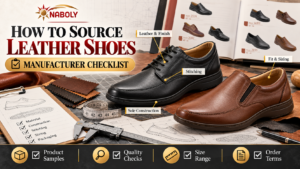
Shoe Construction Evaluation Checklist
| Question | Why It Matters |
|---|---|
| How is the outsole attached? | Identifies the construction method |
| Is stitching structural or decorative? | Prevents misleading product descriptions |
| Is adhesive used? | Clarifies the bonding method |
| What is the outsole material? | Helps evaluate intended use |
| Is there a separate midsole? | Explains the sole structure |
| Can the shoe be resoled? | Clarifies repair possibilities |
| What leather is used? | Identifies upper specifications |
| How is the footwear inspected? | Establishes quality expectations |
| Does the construction vary by model? | Prevents generalizations across a collection |
| Are technical details available? | Supports accurate retail information |
Why Manufacturing Specifications Matter
Retailers should be able to explain what makes a particular shoe suitable for its intended purpose.
That explanation should be based on the actual product.
For example, if a shoe has a cemented outsole, describing it as traditionally welted would be inaccurate.
Likewise, retailers should not promise that a shoe can be resoled unless the design supports that claim.
Compare More Than Construction Alone
A useful evaluation also considers:
- Leather quality
- Upper and lining materials
- Fit and size consistency
- Sole characteristics
- Stitching and finishing
- Overall appearance
- Intended use
- Purchasing requirements
- Product price and landed cost
Our guide to buying wholesale leather footwear in the United States provides additional guidance on evaluating footwear manufacturers and purchasing requirements.
16. What Makes a Well-Constructed Leather Shoe?
A well-constructed shoe is one whose components and assembly methods are appropriate for its intended use.
A repairable traditional dress shoe may be designed around different priorities from a lightweight everyday sandal.
The most important consideration is how the materials and construction function together.
Material Selection
The upper, lining, insole, and outsole should be suitable for the footwear’s design.
Accurate Pattern Cutting
Components need to be prepared according to the intended dimensions.
Proper Assembly
Stitching, bonding, molding, and other operations should follow appropriate manufacturing procedures.
Fit and Shape
The finished shoe should correspond to its intended sizing and last design.
Quality Inspection
The manufacturer should inspect relevant characteristics of the finished footwear.
Depending on the product, these may include:
- Appearance
- Sizing
- Stitching
- Bonding
- Sole attachment
- Finishing
- Visible material condition
Product Consistency
For retailers purchasing multiple pairs of the same model, consistency is an important consideration.
A well-executed construction method should be repeatable within the manufacturer’s specified tolerances.
17. Common Myths About Shoe Construction
Myth 1: All Stitched Shoes Are Better Than Glued Shoes
Not necessarily.
Both stitched and adhesive-bonded construction can be suitable when correctly designed and manufactured.
Myth 2: Goodyear-Welted Shoes Are Automatically Waterproof
False.
Water resistance depends on the complete footwear design, materials, seams, and any protective treatments.
Myth 3: Cemented Shoes Cannot Be Repaired
Not always.
Some cemented shoes can be repaired, although repair options may be limited or economically impractical.
Myth 4: Visible Sole Stitching Guarantees a Welted Construction
False.
Decorative stitching and imitation welts can resemble structural stitching.
Myth 5: Blake-Stitched Shoes Cannot Be Resoled
False.
Many can be resoled by appropriately equipped repair specialists.
Myth 6: A Heavier Shoe Is Always More Durable
False.
Weight alone does not determine product quality or longevity.
Myth 7: Leather Quality Matters More Than Construction
Both matter.
Good upper leather cannot compensate for unsuitable construction, and a sophisticated sole attachment method cannot make poor-quality materials perform well.
Myth 8: One Construction Method Is Best for Every Shoe
False.
The appropriate method depends on the design, expected use, materials, and manufacturing objectives.
Frequently Asked Questions About Shoe Construction
What are the main types of shoe construction?
Common methods include cemented construction, Blake stitching, Goodyear welt construction, stitchdown, Blake Rapid, and direct-injection molding. These describe different ways of attaching the upper and sole components.
What is the difference between stitched and cemented shoes?
Stitched shoes use a mechanical seam as part of the sole attachment, while cemented shoes rely primarily on adhesive bonding. Some stitched constructions also use adhesives.
What is the difference between Blake stitch and Goodyear welt?
Blake stitching generally connects the outsole directly through the upper and insole structure. Goodyear welt construction uses a separate welt and an additional outsole attachment seam.
Is Goodyear welt better than Blake stitch?
Neither is universally better. Goodyear welting often provides a repair-friendly structure, while Blake stitching can support a slimmer and relatively flexible design. Suitability depends on the particular shoe.
Are cemented leather shoes durable?
They can be. Durability depends on materials, bonding quality, manufacturing procedures, and intended use.
Can glued shoes be resoled?
Some can be repaired or resoled, but many cemented designs are not intended for straightforward outsole replacement. A qualified repair specialist should evaluate the particular shoe.
Can Blake-stitched shoes be resoled?
Many Blake-stitched shoes can be resoled, although the process requires appropriate machinery and expertise.
Can Goodyear-welted shoes be resoled more than once?
Often, yes, provided the welt, upper, and other structural components remain in suitable condition. The number of possible repairs cannot be guaranteed for every shoe.
Is Goodyear welt construction waterproof?
No. The construction method alone does not establish waterproof performance.
Is stitching around the sole always functional?
No. Some stitching may be decorative. Buyers should verify the construction method rather than relying exclusively on appearance.
What does direct-injected sole mean?
It refers to a manufacturing process in which the sole-forming material is molded and attached directly to the prepared upper assembly.
Which construction method is best for leather sandals?
There is no universal best method. The choice depends on strap design, footbed construction, materials, flexibility, sole properties, and intended use.
Which construction method is best for leather dress shoes?
Different methods can be appropriate. Blake and Goodyear constructions are associated with certain traditional dress shoes, while cemented construction can support other designs. Fit, materials, and manufacturing quality remain important.
Does better shoe construction mean higher prices?
More elaborate methods may require additional manufacturing operations and equipment, but final pricing also depends on materials, labor, production volumes, branding, and other costs.
How can retailers verify a shoe’s construction method?
Request the model-specific manufacturing description or specification from the supplier. A visual inspection may provide clues but is not always conclusive.
Final Thoughts: Understanding Construction Helps You Choose Better Footwear
Shoe construction is an important part of footwear design, but it should not be reduced to a simple ranking of stitched versus glued products.
Cemented construction can support lightweight and flexible footwear.
Blake stitching can create a streamlined sole profile while allowing certain repair options.
Goodyear welt construction uses a separate welt that often makes outsole replacement more practical.
Stitchdown and Blake Rapid provide additional approaches with their own structural characteristics.
Direct-injection processes offer another manufacturing option suited to selected product designs.
Each method involves different considerations.
For individual customers, the most important factors include comfort, fit, materials, and suitability for the intended activity.
For retailers and distributors, construction knowledge can help improve product comparisons, supplier discussions, and retail descriptions.
The best footwear is not necessarily the shoe with the most complicated construction.
It is the product whose materials, design, and manufacturing methods work together to meet the customer’s needs.
About NABOLY: Leather Footwear Manufacturing in Hebron, Palestine
NABOLY is a family-rooted Palestinian footwear manufacturer based in Hebron, with manufacturing roots dating to 1948.
Our company produces leather footwear collections that include sandals, slip-ons, loafers, dress shoes, casual shoes, and boots.
NABOLY’s manufacturing heritage combines generations of shoemaking knowledge with modern production methods.
We understand the importance of selecting materials and construction techniques appropriate for different footwear designs.
Learn more about our manufacturing background through the NABOLY Shoe Manufacturing page.
Explore Our Leather Footwear Collections
Retailers and customers interested in learning more about NABOLY can explore:
- Men’s Leather Sandals & Slip-Ons
- Leather Loafers & Moccasins
- Men’s Dress & Casual Shoes
- Complete NABOLY Footwear Catalog
For information about the materials or construction of a particular product, contact our team with the relevant model number.
Interested in Wholesale Leather Footwear?
If you’re a U.S. shoe store owner, independent retailer, boutique buyer, or footwear distributor, NABOLY welcomes wholesale inquiries.
Tell us which footwear collections interest you, your estimated order quantities, and any questions about available product specifications.
Our team can review your requirements and discuss the next steps.
Explore NABOLY Wholesale Footwear Opportunities
Written by the NABOLY Team — Leather Footwear Manufacturing in Hebron, Palestine.