Written by the NABOLY Team | Hebron, Palestine | Updated October 26, 2026 | Approximately 13-minute read
Buying leather shoes directly from a manufacturer can open new opportunities for independent shoe stores, boutiques, footwear distributors, and established retailers in the United States. Instead of relying exclusively on domestic wholesalers, businesses can explore collections directly from the companies responsible for producing the footwear.
However, purchasing directly from an overseas factory involves more than choosing attractive products from a catalog.
Retailers must understand the manufacturer’s capabilities, product specifications, ordering requirements, international sizing, quality standards, pricing arrangements, and shipping responsibilities.
For businesses exploring wholesale real leather shoes, knowing what to expect before submitting an inquiry can make the buying process considerably easier.
The most important step when sourcing leather shoes directly from a manufacturer is to establish clear expectations before placing an order. Retailers should confirm product materials, minimum quantities, sizes, prices, samples, production timelines, shipping responsibilities, and quality requirements.
This guide explains how direct footwear manufacturing relationships work, what American retailers should ask potential suppliers, and how to evaluate leather footwear before committing to a wholesale purchase.
Quick Answer: How Do U.S. Retailers Buy Leather Shoes Directly From a Manufacturer?
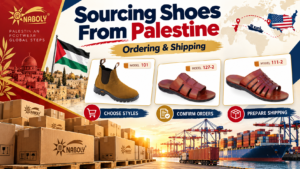
A typical direct-manufacturer purchasing process includes seven stages:
- Identify suitable manufacturers. Research companies producing the footwear styles your store wants to carry.
- Review available collections. Examine product catalogs, materials, sizes, and footwear construction.
- Request product information. Ask about minimum order quantities, pricing, available styles, and manufacturing capabilities.
- Evaluate samples. Where available, inspect actual footwear before committing to a larger purchase.
- Confirm commercial terms. Review quantities, payment arrangements, production timelines, and shipping responsibilities.
- Arrange import and delivery. Coordinate shipping, customs documentation, and applicable import requirements.
- Inspect the shipment. Compare the delivered products with the confirmed order and assess their condition.
Not every manufacturer follows an identical process. Some offer ready-made collections, while others support different types of manufacturing arrangements.
Understanding these stages helps retailers prepare more useful inquiries and avoid preventable misunderstandings.
1. What Does Buying Directly From a Leather Shoe Manufacturer Mean?
Buying directly from a manufacturer means purchasing footwear from the business responsible for producing it rather than relying exclusively on another company that resells the finished products.
For an independent retailer, the distinction can affect how product information, order details, and manufacturing questions are handled.
A manufacturer may be able to discuss how its shoes are constructed, what materials are used, and which product specifications are available.
A wholesaler or distributor may instead focus on maintaining inventory, supplying existing collections, and organizing domestic distribution.
Both arrangements can be useful, depending on the retailer’s needs.
Manufacturer vs. Wholesaler vs. Distributor
| Supplier Type | Primary Role | What Retailers Should Expect |
|---|---|---|
| Direct manufacturer | Produces footwear | Manufacturing information, product specifications, production-related discussions |
| Wholesale supplier | Supplies products in business quantities | Available collections, wholesale pricing, inventory and purchasing terms |
| Distributor | Purchases and supplies products to retailers or other businesses | Access to selected brands, distribution services, purchasing arrangements |
| Sourcing agent | Helps identify and coordinate suppliers | Manufacturer research, communications and sourcing assistance |
These categories can overlap.
A footwear manufacturer may operate its own wholesale division or work with distributors in different markets.
The important question is not simply what the company calls itself.
Retailers should understand who manufactures the footwear, who sells it, and who is responsible for fulfilling the order.
Why Some Retailers Prefer Direct Manufacturing Relationships
Working directly with a manufacturer may provide opportunities for:
- Clearer communication about footwear specifications
- Access to the manufacturer’s existing product collections
- Better understanding of material and construction choices
- Direct discussion of production requirements
- Opportunities to develop an ongoing supply relationship
- More detailed information about product availability and future collections
However, buying directly does not automatically guarantee lower total costs, smaller minimum orders, faster delivery, or customization options.
Those advantages depend on the specific manufacturer’s capabilities and commercial arrangements.
2. What Types of Leather Shoes Can Retailers Source From Manufacturers?
Footwear manufacturers may specialize in particular product categories or produce several types of shoes.
Understanding those categories can help retailers select a manufacturer whose experience aligns with their store.
For NABOLY, the published product range includes multiple leather footwear categories.
Men’s Leather Sandals
Leather sandals are often purchased by retailers serving customers who want casual or warm-weather footwear.
Common styles include slides, fisherman sandals, toe-loop designs, and adjustable-strap sandals.
Buyers should examine strap construction, footbed materials, sole attachment, and sizing.
Retailers introducing this category can also read our guide to adding a leather sandal line to a shoe store.
It covers initial assortment planning, pricing considerations, and inventory decisions in greater detail.
Leather Loafers and Slip-Ons
Loafers and slip-ons can appeal to customers seeking footwear that is easy to wear while maintaining a more structured appearance than many open sandals.
When evaluating this category, consider the upper’s flexibility, fit around the heel, lining, footbed, and overall construction.
The appearance of a loafer does not guarantee that it will be comfortable for every foot shape.
Actual fit and product specifications are important.
Leather Dress Shoes
Dress shoes may be an appropriate category for stores serving customers who need footwear for business, formal occasions, or professional environments.
Retailers should pay attention to:
- Upper leather finish
- Stitching consistency
- Toe shape
- Heel construction
- Sole materials
- Lining and insole quality
- Size and width availability
The ideal collection depends on the store’s customers and the price range it intends to serve.
Casual Leather Shoes
Casual leather footwear covers a broad range of designs, including comfort-oriented styles and everyday closed-toe shoes.
Retail buyers should evaluate whether the products match their customers’ expectations for fit, appearance, flexibility, and intended use.
Leather Boots
Manufacturers may produce casual, seasonal, work-related, or other specialized boot designs.
These categories can have substantially different construction requirements.
Retailers sourcing protective work footwear should verify any applicable safety certifications or test results for the specific model.
A leather upper alone does not establish that a boot meets an occupational safety standard.
Choosing the Right Product Line
Instead of selecting a manufacturer solely because it offers a large catalog, compare the product categories that are most relevant to your store.
A retailer specializing in sandals may value a focused selection of well-specified sandal models.
Another store may need a broader assortment of dress shoes, loafers, and boots.
The right manufacturing relationship depends on your target customers and your intended product selection.
3. How Can Retailers Evaluate the Quality of Wholesale Leather Shoes?
A product photograph cannot reveal every important detail about footwear quality.
Two leather shoes can appear similar in an online catalog but differ significantly in materials, construction, and fit.
That makes product specifications especially important.
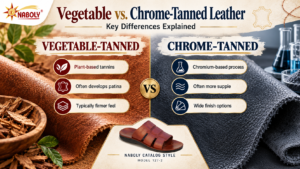
Understand the Leather Used in the Upper
Leather terminology can be confusing.
Full-grain, top-grain, corrected-grain, and genuine leather do not represent one universal quality ranking.
These terms provide different kinds of information about the material.
Retailers evaluating leather footwear should understand what the manufacturer means when describing its products.
Our leather types guide explains these distinctions and why the finished shoe should be evaluated beyond the label.
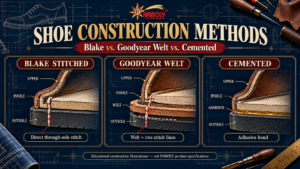
Examine How the Shoe Is Constructed
Footwear can use different methods of attaching soles and assembling uppers.
Common construction techniques include adhesive bonding, stitching, direct injection, and combinations of methods.
The appropriate construction depends on the intended product.
A lightweight casual sandal may not require the same construction as a structured leather boot.
Rather than assuming that one method is always superior, buyers should ask whether the chosen construction is appropriate for the shoe’s intended use.
Evaluate the Footbed and Lining
Comfort depends on more than the outer appearance of a shoe.
The footbed, insole, lining, and internal shape can affect how the footwear feels when worn.
Ask what materials are used and whether specific models have features relevant to your customers.
Inspect Stitching and Finishing
When reviewing samples, examine:
- Stitch placement
- Seam consistency
- Leather edges
- Sole attachment
- Strap attachment points
- Left and right shoe symmetry
- Surface finish
- Visible manufacturing defects
A well-defined inspection process can help retailers identify questions before finalizing a wholesale order.
Why Quality Consistency Matters
A sample represents only a small portion of a potential order.
Retailers should discuss how the manufacturer evaluates consistency across the finished products.
Ask whether agreed specifications, appearance standards, and product tolerances can be documented.
For additional inspection guidance, see NABOLY’s existing article on how to tell good leather from bad.
4. What Information Should a Manufacturer Provide Before a Wholesale Order?
One of the most useful things a buyer can request is a product specification sheet.
This document describes the important characteristics of a footwear model.
The exact information available depends on the manufacturer and product.
Example Footwear Specification Checklist
| Specification | Information to Request |
|---|---|
| Product identification | Model number or style code |
| Footwear category | Sandal, loafer, dress shoe, casual shoe, or boot |
| Upper material | Leather type and relevant specifications |
| Lining | Material and construction |
| Insole or footbed | Material and design |
| Outsole | Material and attachment method |
| Sizes | Available range and original size system |
| Colors | Available options |
| Packaging | Packaging and labeling details |
| Order quantity | Applicable minimum and size assortment requirements |
| Samples | Availability and cost, if applicable |
| Production | Estimated readiness or manufacturing timeline |
| Quality | Agreed workmanship and inspection requirements |
A clear specification sheet reduces the need to make assumptions from product photographs.
Why Model Numbers Matter
A manufacturer may produce several similar-looking shoes.
Model numbers help identify the exact products being discussed.
For example, a retailer may see several different brown leather sandals that differ in strap construction or sole design.
Referring to the model numbers makes it easier to communicate about the correct products.
NABOLY’s online footwear catalog can serve as a starting point for identifying product interests.
Buyers should confirm the actual availability and specifications of the selected models before ordering.
5. What Are Minimum Order Quantities for Wholesale Footwear?
Minimum order quantity, commonly abbreviated as MOQ, is the smallest quantity a supplier agrees to sell under a particular purchasing arrangement.
MOQs are important because they affect how much inventory a retailer must purchase.
However, there is no universal minimum order quantity for all footwear manufacturers.
Requirements can vary based on:
- Product style
- Available stock
- Manufacturing process
- Number of colors
- Size distribution
- Order type
- Packaging requirements
- Supplier policies
Why Manufacturers May Set Minimum Orders
Footwear production involves preparing materials, equipment, patterns, components, and production schedules.
Producing a very small quantity of a specific style can create different manufacturing economics from producing a larger run.
For that reason, some manufacturers establish minimum quantities for particular models or production arrangements.
Other suppliers may have finished stock available under different purchasing terms.
What Should a Retailer Ask?
Instead of asking only, “What is your minimum order?”
Consider asking whether the minimum applies:
- Per total order
- Per footwear model
- Per color
- Per size
- Per manufacturing run
These distinctions can substantially change how an order must be structured.
Can Small Shoe Stores Buy Directly From a Factory?
Small retailers can inquire directly with manufacturers, but the availability of suitable quantities depends on the supplier.
A store requesting 50 pairs may have different purchasing options from a distributor requesting 2,000 pairs.
These numbers are examples, not NABOLY’s order minimums.
If you are contacting NABOLY, include your estimated quantity so the team can review your requirements through the Wholesale Footwear inquiry page.
6. Should Retailers Request Samples Before Ordering?
Samples can help retailers evaluate footwear before making a larger purchasing commitment.
The opportunity to inspect a product physically is particularly useful when working with an international supplier for the first time.
A sample may reveal details that are difficult to judge from photographs.
What to Check When a Sample Arrives
Fit: Does the shoe match the expected size and general shape?
Materials: Does the upper material correspond to the supplier’s description?
Comfort: How does the shoe feel during a reasonable fitting evaluation?
Construction: Are stitching, sole attachment, and finishing appropriate?
Appearance: Does the product look consistent with the catalog?
Packaging: Are the model number, size, and other labels understandable?
Product consistency: If several samples are available, do they appear to follow the same specifications?
Sample Approval vs. Production Approval
A retailer should not assume that approving one sample establishes every detail of a later production order.
It is useful to document exactly what has been approved.
This may include the model, color, materials, size, construction, and any applicable reference specifications.
A sample can become a useful comparison point when the final goods arrive.
Does NABOLY Offer Samples?
Retailers interested in evaluating NABOLY footwear before placing a wholesale order can ask about sample availability.
The company should confirm applicable sample policies, costs, and shipping arrangements directly.
Sample availability should not be assumed for every model.
7. How Do European Shoe Sizes Translate to US Retail Sizes?
International sizing is one of the most important considerations for American footwear retailers.
A manufacturer based in Palestine may use European sizing on certain footwear collections, while American customers expect US men’s or women’s size labels.
These systems are not interchangeable.
Why Conversion Charts Are Approximate
Sizing varies by manufacturer and sometimes by footwear model.
The shoe’s last, toe shape, width, footbed, and construction can all influence its actual fit.
A US size number should not be assigned solely by guessing the equivalent European size.
For a complete explanation, see our international shoe size conversion chart.
That guide explains EU, US, UK, and commonly encountered Middle Eastern size designations.
Questions to Ask About Sizing
Before ordering, confirm:
- Which size system the manufacturer uses
- Whether the collection is intended for men or women
- Available size ranges
- Product-specific conversion information
- Whether different styles fit differently
- Any width information
- Size labels used on the footwear and packaging
Why Size Runs Matter
A size run describes how many pairs of each size are included in an order.
Suppose a retailer wants 120 pairs of a particular leather loafer.
Rather than ordering 20 pairs each in six sizes automatically, the retailer should consider which sizes sell most frequently.
A thoughtful size distribution helps align inventory with customer demand.
8. How Does Wholesale Pricing Work With a Direct Manufacturer?
Wholesale pricing can depend on the selected product, quantities, specifications, materials, and commercial arrangements.
Retailers should request an actual quotation rather than assuming prices found elsewhere represent current manufacturer terms.
What Should a Wholesale Quote Include?
A useful quotation should identify:
- Product models
- Quantities
- Unit prices
- Currency
- Packaging terms
- Applicable payment terms
- Shipping responsibilities
- Quotation validity period
- Production or dispatch expectations
- Any other relevant charges or conditions
The exact details depend on the supplier and transaction.
Wholesale Price vs. Landed Cost
The quoted price of the footwear is not necessarily the total cost of receiving it in the United States.
Landed cost may include transportation, duties, customs brokerage, insurance, and other relevant purchasing expenses.
Consider this hypothetical example:
| Cost Component | Example Amount Per Pair |
|---|---|
| Supplier’s quoted product price | $38 |
| Freight allocation | $7 |
| Duties and import-related allocation | $5 |
| Other allocated receiving costs | $2 |
| Example landed cost | $52 |
These are illustrative figures only, not NABOLY wholesale prices, current tariff estimates, or actual shipping quotations.
If the retailer sells the shoes for $95 per pair, the simplified gross profit is $43 per pair.
The resulting gross margin is approximately 45.3% before any other expenses not included in the product’s cost.
This example demonstrates why retailers should calculate profitability using realistic landed costs rather than supplier prices alone.
Why the Lowest Price Isn’t Always the Best Choice
A low-priced product may not be the best purchasing decision if it creates problems involving inconsistent quality, unsuitable sizing, excessive returns, or poor customer satisfaction.
Retailers should evaluate the total value of the purchase, including product suitability, communication, reliability, and commercial terms.
9. What Should U.S. Retailers Know About Importing Leather Shoes?
Importing footwear into the United States involves customs requirements that should be evaluated before finalizing an international order.
These requirements can vary according to the product’s materials, construction, origin, and applicable trade rules.
Footwear Classification Matters
Imported footwear is generally classified within Chapter 64 of the Harmonized Tariff Schedule of the United States.
Classification can depend on characteristics such as the upper material, outer sole, construction, and other relevant details.
Not every shoe described as leather footwear receives the same tariff classification or duty treatment.
A leather sandal and a textile-upper casual shoe may be classified differently.
Retailers should work with a qualified customs broker or other appropriate trade professional to confirm applicable requirements.
Country-of-Origin Information
Imported goods are subject to applicable country-of-origin marking rules.
Retailers should confirm the origin information associated with the finished footwear and ensure that the labeling and documentation meet relevant legal requirements.
The country where a manufacturer is located should not be used as a substitute for verifying the legal origin of a particular product.
Shipping Responsibilities
International transactions should clearly establish who is responsible for transportation and related costs.
Buyers may encounter commercial terms such as EXW, FOB, FCA, DAP, or DDP.
These terms allocate different responsibilities between buyers and sellers, and some are appropriate only for particular transportation methods.
The correct terms should be agreed upon in writing before the order is finalized.
Import Documentation
Depending on the shipment, documentation may include:
- Commercial invoice
- Packing list
- Transportation documentation
- Product classification and origin information
- Customs entry documentation
- Other records required for the specific shipment
Requirements should be confirmed for the actual products and transaction.
Should Retailers Handle Customs Themselves?
Retailers unfamiliar with international footwear importing may benefit from working with a licensed customs broker.
A broker can help buyers understand entry procedures, documentation, and applicable duties.
This is especially important because regulations and tariff treatment may change over time.
10. What Should Retailers Expect During Footwear Production?
Not every wholesale order requires a new manufacturing run.
Some orders may be filled from existing product availability, while others may involve manufacturing or assembling products for the buyer.
Retailers should clarify which arrangement applies.
If the Products Are Already Available
The supplier may need to confirm stock quantities, sizes, colors, packaging, and shipment arrangements.
Availability should be checked before the buyer commits.
If the Products Require Manufacturing
Additional time may be needed for materials, scheduling, production, inspection, and packing.
The expected timeline can depend on the product design, quantity, material availability, and factory workload.
Why Production Updates Matter
Clear communication during an order can help buyers coordinate retail launch dates and inventory planning.
Buyers may want to establish when they will receive updates and what will happen if there is a material change to the agreed schedule.
These expectations should be discussed before the order begins.
Can a Manufacturer Guarantee Delivery Dates?
A manufacturer may provide an expected production or dispatch date, but international delivery also depends on transportation, customs procedures, and other factors.
The buyer and seller should distinguish between:
- Production completion
- Goods ready for dispatch
- Carrier departure
- Estimated arrival
- Final delivery
These are different milestones.
11. How Can Retailers Reduce Quality and Shipping Risks?
International purchasing requires careful documentation because the supplier and buyer may be located far apart.
Several practical steps can reduce confusion.
Confirm Specifications in Writing
Record the agreed models, colors, quantities, materials, and size distributions.
Avoid relying exclusively on informal conversations.
Clarify Quality Expectations
Discuss acceptable workmanship, appearance, and packaging requirements.
If a specific quality inspection procedure has been agreed upon, ensure both parties understand it.
Understand the Defect and Claim Process
Ask how potential shortages, shipping damage, or manufacturing defects should be reported.
Important questions include:
- How quickly must a claim be submitted?
- What photographs or documentation are required?
- Who reviews the claim?
- What remedies, if any, are available under the agreement?
These policies should be confirmed before ordering.
Verify Payment Instructions
Use verified business communication channels before making payments.
If a supplier’s bank details unexpectedly change, independently confirm the instructions using a trusted contact method.
This is a useful precaution for international purchases.
Inspect the Shipment When It Arrives
Compare the delivered goods with the purchase documentation.
Review model numbers, quantities, sizes, and visible condition.
If issues are identified, record them and contact the supplier according to the agreed procedures.
12. What Makes a Good Long-Term Footwear Manufacturing Relationship?
For retailers, choosing a supplier is not only about the first order.
A reliable ongoing relationship can help businesses plan future collections and communicate changing inventory needs.
However, building that relationship requires clear expectations on both sides.
Consistent Product Information
Retailers benefit from understanding whether the specifications of an existing model remain consistent across orders.
Material or construction changes should be discussed when they affect the agreed product.
Organized Ordering
A structured purchasing process helps buyers and suppliers avoid confusion about model numbers, quantities, and timelines.
Clear Communication
Both parties should document important decisions and provide updates when something changes.
Realistic Expectations
Manufacturers and retailers should avoid agreeing to timelines or conditions that have not been properly evaluated.
Accurate information is more valuable than unrealistic promises.
Continuous Product Evaluation
Retailers can use customer feedback to identify which styles and sizes deserve more attention.
Manufacturers may also gain useful insights from buyers serving different markets.
A strong relationship creates opportunities for better planning and more informed purchasing decisions over time.
13. Why Consider a Leather Footwear Manufacturer in Hebron, Palestine?
Hebron has a long history of leatherworking and shoe production.
Its industrial heritage includes family-run shoemaking workshops, footwear manufacturers, and businesses involved in related materials and components.
For retailers researching international suppliers, understanding a manufacturer’s background can provide useful context about its experience.
A City With Footwear Manufacturing History
Hebron became an important center of Palestinian footwear manufacturing through generations of local production activity.
The development of its shoe industry involved skilled workers, specialized suppliers, and businesses that gradually introduced new equipment and manufacturing methods.
Read our article on Hebron’s shoemaking heritage to learn how the city’s footwear industry developed.
NABOLY’s Manufacturing Background
NABOLY is a family-rooted leather footwear manufacturer based in Hebron, Palestine.
Its company history extends across generations, with experience developing different footwear collections.
The company’s published materials describe leather sandals, casual footwear, comfortable shoes, dress shoes, and other footwear categories.
NABOLY’s history also describes experience selling into international markets.
For more information about the company’s production background, visit the NABOLY Shoe Manufacturing page.
What Should U.S. Buyers Consider?
A manufacturer’s location and history can help explain its background, but retailers should still evaluate the actual business and products.
Review product information, relevant manufacturing capabilities, ordering requirements, pricing, shipping arrangements, and quality specifications.
A good wholesale purchasing decision should be supported by clear facts about the proposed order.
14. Questions to Ask a Leather Shoe Manufacturer Before Ordering
The following checklist can help American retailers prepare for their first supplier conversation.
| Question | Why It Matters |
|---|---|
| Do you manufacture the footwear directly? | Clarifies the supplier’s role |
| Which models are currently available? | Identifies suitable products |
| What leather and materials are used? | Supports accurate product evaluation |
| What sizes and colors are offered? | Helps plan inventory |
| Do you have a product-specific size chart? | Reduces international sizing confusion |
| What is the applicable minimum order? | Establishes purchasing requirements |
| Can different models be combined? | Helps build a practical assortment |
| Are samples available? | Allows product evaluation |
| What is included in the quoted price? | Helps calculate actual costs |
| What payment terms apply? | Clarifies financial responsibilities |
| When can the order be dispatched? | Supports retail planning |
| Which shipping terms apply? | Establishes transportation responsibilities |
| How are quality concerns handled? | Clarifies the claims process |
| What documentation accompanies the shipment? | Supports import preparation |
Retailers should request clear answers to the questions relevant to their particular purchase.
Not every supplier will offer the same services, products, or commercial terms.
15. Example: Preparing Your First Wholesale Footwear Inquiry
A useful inquiry explains what the buyer is looking for without requiring every detail to be finalized.
Consider this example.
Business type: Independent shoe retailer
Country: United States
Interested products: Men’s leather sandals, casual shoes, and loafers
Estimated order quantity: Approximately 150 pairs
Preferred materials: Leather uppers, subject to product specifications
Requested information: Available models, prices, sizes, samples, and applicable order requirements
Additional questions: Export arrangements, shipping terms, and estimated dispatch timeline
This is a hypothetical inquiry. The quantity is not a statement about NABOLY’s minimum order requirements.
By including these details, a retailer gives the manufacturer enough context to begin discussing appropriate options.
The business can then review the manufacturer’s response before deciding whether to proceed.
Frequently Asked Questions About Wholesale Leather Shoes
Can U.S. retailers purchase leather shoes directly from overseas manufacturers?
Yes. American retailers can explore direct purchasing arrangements with international footwear manufacturers. The transaction must comply with applicable import requirements, and the buyer should confirm commercial terms and product specifications before ordering.
What is the difference between a footwear manufacturer and a wholesaler?
A manufacturer produces footwear, while a wholesaler primarily supplies products to other businesses. Some manufacturers also sell wholesale directly, so these roles can overlap.
Is buying shoes directly from a factory cheaper?
Not always. A factory quotation may offer different pricing from a domestic distributor, but the retailer must also account for shipping, import duties, brokerage, and other applicable expenses. Total landed cost provides a more useful comparison.
What is the minimum order for wholesale leather shoes?
Minimum order quantities differ between manufacturers, products, and order types. Retailers should ask whether the requirement applies per model, color, size, or total purchase.
Can small independent shoe stores work with international manufacturers?
Yes, small retailers can contact international footwear manufacturers. Whether a particular purchase is suitable depends on available products, ordering requirements, costs, and the retailer’s needs.
Should I request samples before buying wholesale footwear?
Evaluating samples can help retailers inspect fit, materials, construction, and finishing. Sample availability and terms should be confirmed with the supplier.
What leather is best for wholesale shoes?
There is no single leather specification suitable for every footwear category. Buyers should evaluate the material’s properties, finishing, thickness, intended use, and relationship to the shoe’s complete construction.
Are European shoe sizes the same as US sizes?
No. EU and US shoe sizes use different numerical systems. Conversions are approximate, so retailers should request the manufacturer’s product-specific sizing information.
How long does a wholesale footwear order take?
Timelines depend on product availability, manufacturing requirements, quantity, transport arrangements, and destination. Buyers should request a specific estimate rather than relying on a universal delivery period.
What taxes and duties apply when importing leather shoes into the United States?
Applicable duties and other import charges depend on the product’s customs classification, origin, and current rules. U.S. retailers should confirm the requirements for the actual merchandise with a qualified customs broker.
Can retailers request custom-branded leather shoes?
Some footwear manufacturers offer customization or private-label arrangements, but the availability of these services depends on the supplier. Retailers should describe their requirements and obtain written confirmation before assuming customization is available.
How do retailers protect themselves when buying internationally?
Buyers should verify the supplier, document specifications and commercial terms, confirm payment instructions, understand applicable import requirements, and inspect delivered products according to the agreement.
Does NABOLY accept wholesale inquiries from U.S. footwear retailers?
NABOLY welcomes inquiries from U.S. retailers, boutiques, and distributors interested in exploring its leather footwear collections. Product availability and commercial terms should be confirmed directly with the company.
How can I request wholesale footwear information from NABOLY?
Visit the NABOLY Wholesale page and provide your business information, preferred footwear categories, estimated quantities, and relevant purchasing questions.
Final Thoughts: Buying Wholesale Leather Shoes With Confidence
Sourcing leather footwear directly from a manufacturer can give retailers another way to develop their inventory and explore products beyond their existing supplier relationships.
However, the success of an international wholesale purchase depends on preparation.
Retailers should begin by identifying the footwear categories their customers need.
They should then review manufacturer information, understand material specifications, evaluate samples where available, and calculate realistic costs.
Clear discussions about sizing, quantities, payment, shipping, and quality expectations are equally important.
For American shoe stores, a reliable wholesale relationship should be built on accurate information and documented agreements rather than assumptions.
Whether you are exploring leather sandals for a small boutique or evaluating a broader footwear collection for an established retail business, understanding the direct manufacturing process can help you make more informed decisions.
About NABOLY: Leather Footwear Manufacturing in Hebron, Palestine
NABOLY is a Palestinian footwear manufacturer based in Hebron, a city with an established history of leatherworking and shoemaking.
With manufacturing experience developed across generations, NABOLY has produced a range of leather footwear collections, including sandals, casual shoes, loafers, dress shoes, and boots.
The company combines its manufacturing background with an interest in serving footwear customers across different markets.
Retailers can learn more about the manufacturing background and explore available footwear styles before submitting an inquiry.
Explore NABOLY Footwear Collections
Interested in seeing examples of available designs?
Visit our complete footwear catalog, browse our men’s leather sandals and slip-ons, or explore our fisherman sandal collection.
Looking for a Leather Footwear Manufacturing Partner?
If you’re a U.S. shoe store owner, independent retailer, boutique buyer, or distributor, NABOLY welcomes your wholesale inquiry.
Share the footwear categories that interest you, your estimated purchasing quantities, and any questions about available products.
Our team can review your requirements and discuss the available next steps.
Contact NABOLY About Wholesale Leather Footwear
Written by the NABOLY Team — Leather Footwear Manufacturing in Hebron, Palestine.