
Most leather sandals do not die of overuse. They die of one hot car boot, one soaking that was never dried properly, or three years folded in the back of a cupboard. The leather itself is usually the last thing to give up.
Here is the routine we give customers who want a pair to see out three summers or more.
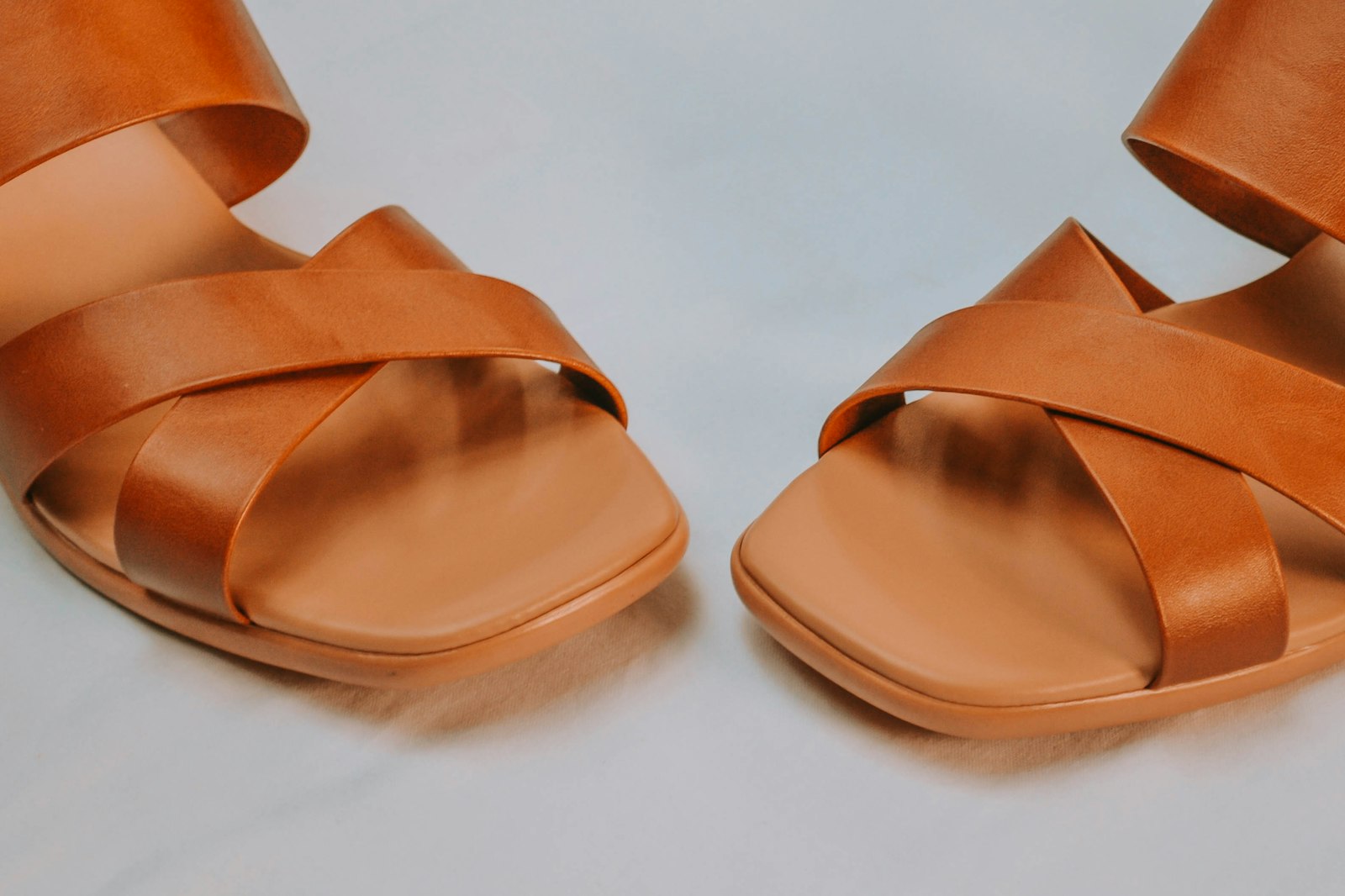
Break them in properly, once
New leather straps are stiff by design — they are cut to stretch into the shape of your foot and then stop. Wear a new pair around the house for two or three short spells before a full day out. The footbed will take a light impression of your foot within about a week of normal wear, and after that the fit is yours.
Do not try to speed this up with heat or water. Both stretch the leather past where it should go and it never comes back.
Let them dry slowly, always
This is the single habit that saves the most pairs. If sandals get wet — rain, a sea, a wash — keep them away from radiators, heaters, direct sun and car dashboards.
- Wipe off the surface water with a dry cloth.
- Stuff the toe area loosely with paper to hold the shape.
- Leave them somewhere shaded with air moving around them, for a day.
Fast heat drives the oils out of leather. What is left goes hard, then cracks along the flex lines. It is irreversible.
Clean them before they look dirty
A damp cloth, once a week in the season, is enough for most wear. For salt marks or ground-in dust, use a barely-damp cloth with a drop of mild soap, wipe in one direction, then wipe again with clean water and let them dry as above.
Avoid soaking, washing machines, and solvent cleaners. Leather is not fabric.
Condition twice a season
Leather is skin, and skin needs oil. A neutral leather conditioner or a light cream twice a season — once at the start, once in the middle — keeps the straps supple and the color even.
Use very little. Work it in with your fingers or a soft cloth, leave it twenty minutes, buff off what is left. Too much conditioner darkens leather and attracts dust.
Store them flat, not squashed
At the end of the season: clean, condition, let them dry completely, then store them flat in a breathable bag or a box with the lid off. Not in a sealed plastic bag, where trapped moisture finds mold. Not folded under heavier shoes, where the straps take a crease they will keep.
Know when to resole, not replace
The sole is the part that genuinely wears out, and it is also the part designed to be replaced. If the uppers are sound and the footbed still fits your foot, a resole gives you another two or three seasons for a fraction of a new pair.
Signs it is time: the tread is smooth under the ball and heel, the edge of the sole is rounding off, or you can feel the ground through it.
What is normal and what is not
- Normal: the footbed darkening where your foot sits, straps softening and relaxing slightly, small tonal differences between the left and right.
- Normal: a faint leather smell for the first few wears.
- Not normal: stitching coming away, a strap separating from the footbed, or a sole lifting at the edge within the first season. That is a fault — see our returns and refunds page.
Worth knowing before you buy
How long a pair lasts is decided before you ever put them on — in the hide it was cut from and the way it was built. How to tell good leather from bad covers what to look for, and the manufacturing page shows how a NABOLY sandal is put together. Browsing for a pair? Start with sandals and slip-ons or the women’s range.